The Vitamin D Test is one of the most important laboratory investigations used to evaluate the level of vitamin D in your body and assess your overall bone health, muscle function, and immune system. Vitamin D is an essential nutrient that plays a vital role in helping the body absorb calcium and phosphorus, two minerals necessary for building and maintaining strong bones and teeth. In addition to supporting bone health, vitamin D contributes to healthy muscle function, nerve signaling, immune response, and overall well-being. Despite its importance, vitamin D deficiency has become one of the most common nutritional deficiencies worldwide, particularly in countries like India, where lifestyle changes, indoor occupations, air pollution, sunscreen use, and limited exposure to sunlight have reduced the body’s natural production of vitamin D. Many people remain unaware of their deficiency because symptoms often develop gradually and may be mistaken for general tiredness or aging. Persistent fatigue, muscle weakness, bone pain, frequent fractures, mood changes, and recurrent infections may all be associated with low vitamin D levels. A Vitamin D Test allows healthcare providers to accurately measure vitamin D in the blood, identify deficiencies early, monitor treatment effectiveness, and recommend appropriate dietary changes or supplementation when necessary. Doctors commonly recommend this test for individuals with osteoporosis, chronic kidney disease, malabsorption disorders, autoimmune diseases, obesity, or symptoms suggestive of vitamin D deficiency. It is also included in many preventive health checkups to detect nutritional deficiencies before complications occur. In this comprehensive guide, you will learn everything about the Vitamin D Test, including what it measures, why it is important, normal vitamin D levels, preparation guidelines, report interpretation, and practical ways to maintain healthy vitamin D levels throughout your life.
What is a Vitamin D Test?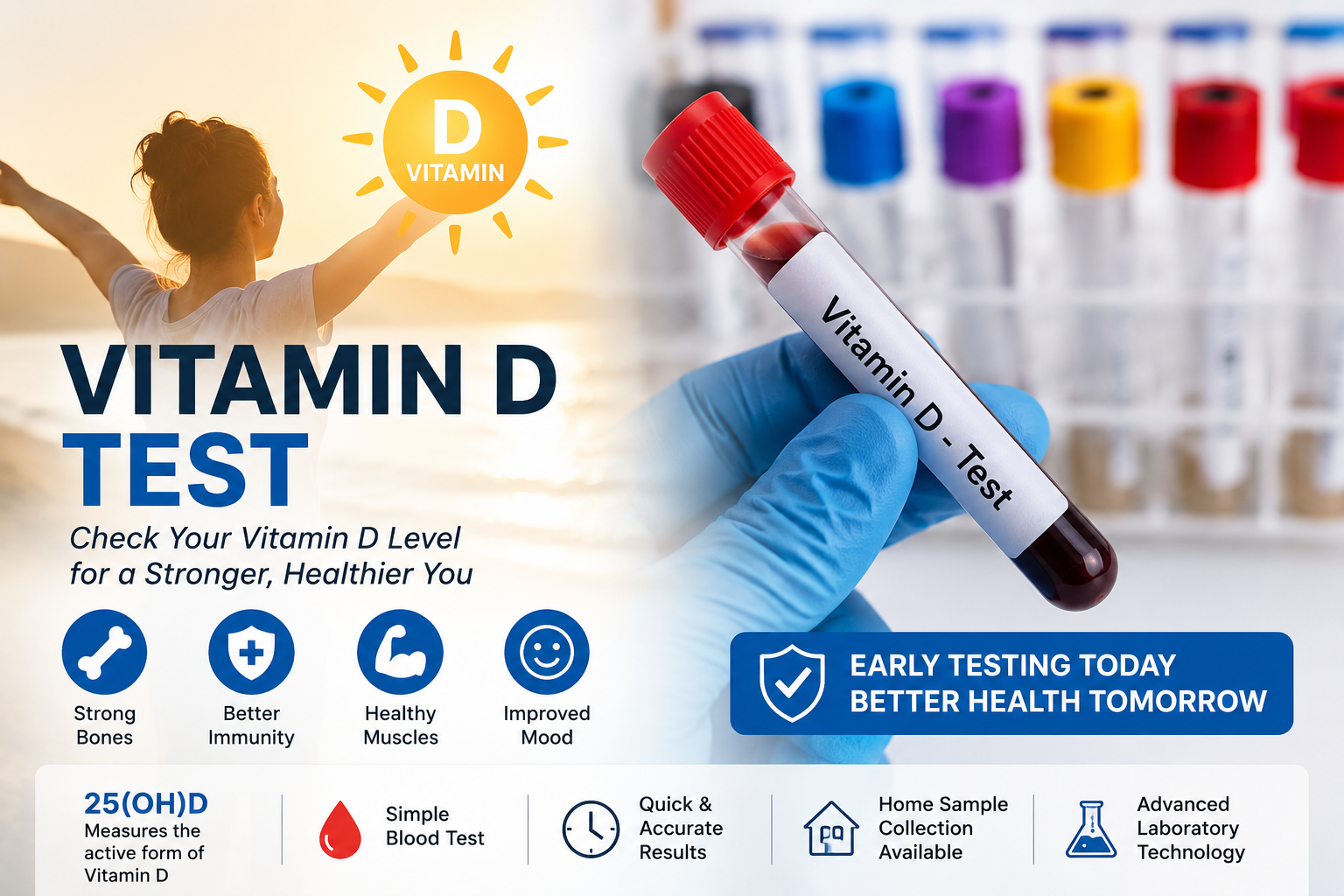
A Vitamin D Test is a laboratory blood test that measures the amount of vitamin D circulating in your bloodstream to determine whether your body has sufficient levels to support healthy bones, muscles, and immune function. The test helps healthcare providers identify vitamin D deficiency, vitamin D insufficiency, or excessive vitamin D levels, allowing appropriate treatment and monitoring. Since vitamin D is essential for calcium absorption, maintaining adequate levels is critical for preventing bone disorders such as osteoporosis, osteomalacia, and rickets. The Vitamin D Blood Test is one of the most reliable methods for assessing the body’s vitamin D status because symptoms alone cannot accurately determine whether deficiency exists.
Doctors most commonly request the 25-Hydroxy Vitamin D Test, which measures the storage form of vitamin D circulating in the bloodstream. This form reflects vitamin D obtained from sunlight exposure, food, and supplements, making it the best indicator of overall vitamin D status. The Vitamin D3 Test specifically evaluates vitamin D3, the form naturally produced in the skin after exposure to sunlight and commonly found in dietary supplements. Because vitamin D levels change gradually over time, the Vitamin D Test provides valuable information about long-term nutritional status rather than short-term dietary intake.
Healthcare providers recommend a Vitamin D Test for individuals experiencing bone pain, muscle weakness, unexplained fatigue, frequent fractures, slow healing after bone injuries, or recurrent infections. People with osteoporosis, chronic kidney disease, liver disease, obesity, digestive disorders that reduce nutrient absorption, autoimmune diseases, or thyroid disorders may also require regular testing. Pregnant women, postmenopausal women, elderly individuals, and children with delayed growth or bone development often undergo Vitamin D Screening Tests because these groups have a higher risk of deficiency. Individuals who spend most of their time indoors or have very limited sunlight exposure are also more likely to develop low vitamin D levels.
The Vitamin D Test is commonly included in routine preventive health checkups because vitamin D deficiency frequently develops without obvious symptoms. Early diagnosis allows doctors to recommend safe sunlight exposure, dietary improvements, lifestyle modifications, or vitamin D supplementation before complications develop. The test requires only a small blood sample collected from a vein in your arm and is generally completed within a few minutes. Laboratory analysis is performed using advanced automated equipment, and reports are usually available on the same day or within 24 hours. Early detection through a Vitamin D Test supports healthier bones, stronger muscles, improved immunity, and better long-term health.
What Does a Vitamin D Test Measure?
A Vitamin D Test measures the concentration of vitamin D circulating in your bloodstream, allowing healthcare providers to evaluate whether your body has sufficient levels to support healthy bone formation, calcium absorption, muscle strength, and immune function. Although vitamin D exists in different forms, laboratories primarily measure 25-Hydroxy Vitamin D, also known as 25(OH)D, because it is the most stable and accurate indicator of overall vitamin D status. This measurement reflects vitamin D obtained from sunlight, food, and supplements over several weeks, making it the preferred laboratory investigation for diagnosing deficiency.
25-Hydroxy Vitamin D Test
The 25-Hydroxy Vitamin D Test is considered the gold standard for evaluating vitamin D levels because it measures the major storage form of vitamin D present in the bloodstream. After vitamin D is produced in the skin or absorbed from food, it undergoes processing in the liver, where it is converted into 25-hydroxy vitamin D. Measuring this form provides the most accurate assessment of the body’s vitamin D reserves. Healthcare providers use the 25-Hydroxy Vitamin D Test to diagnose deficiency, monitor supplementation, evaluate treatment effectiveness, and identify excessive vitamin D levels resulting from inappropriate supplement use. Because vitamin D plays a critical role in calcium metabolism, maintaining healthy 25-Hydroxy Vitamin D levels is essential for preserving bone strength and preventing fractures.
Vitamin D3
The Vitamin D3 Test relates to vitamin D3 (cholecalciferol), the natural form of vitamin D produced by the skin after exposure to sunlight. Vitamin D3 is also commonly found in dietary supplements and fortified foods. Once produced or consumed, vitamin D3 undergoes conversion in the liver and kidneys before becoming biologically active. Adequate vitamin D3 supports calcium absorption, healthy bones, proper muscle contraction, and immune system regulation. Low vitamin D3 levels may contribute to osteoporosis, muscle weakness, chronic fatigue, and increased susceptibility to infections. Monitoring vitamin D3 through a Vitamin D Blood Test helps doctors determine whether supplementation or lifestyle modifications are necessary.
Relationship Between Vitamin D and Calcium
One of the most important functions of vitamin D is its role in regulating calcium absorption from the digestive tract. Without sufficient vitamin D, the body cannot efficiently absorb calcium regardless of dietary intake. This may cause calcium deficiency, weakened bones, muscle cramps, and increased fracture risk. Over time, prolonged vitamin D deficiency forces the body to remove calcium from bones to maintain normal blood calcium levels, gradually reducing bone density. Healthcare providers often evaluate vitamin D together with calcium when investigating osteoporosis, recurrent fractures, bone pain, or other metabolic bone disorders. Understanding the relationship between calcium and vitamin D highlights the importance of routine Vitamin D Test screening for maintaining lifelong bone health.
Vitamin D and the Immune System
In addition to supporting bone health, vitamin D plays a significant role in maintaining a healthy immune system. Vitamin D helps regulate immune cell activity, supports the body’s natural defense mechanisms, and contributes to the normal functioning of both innate and adaptive immunity. Research suggests that adequate vitamin D levels may help reduce susceptibility to certain infections while supporting overall immune balance. Individuals with chronic vitamin D deficiency often experience frequent infections, slower recovery from illness, and reduced overall well-being. Measuring vitamin D through a Vitamin D Test allows healthcare providers to identify deficiency and recommend appropriate interventions that support both skeletal health and immune function.
Together, these measurements provide valuable information about the body’s nutritional status, bone metabolism, calcium regulation, and immune health. Rather than relying solely on symptoms, healthcare providers use the Vitamin D Test to accurately diagnose deficiency, monitor treatment progress, and recommend personalized supplementation or lifestyle modifications that improve long-term health outcomes.
Vitamin D Test Normal Range
Understanding the Vitamin D Test Normal Range is essential because it helps determine whether your body has sufficient vitamin D to support healthy bones, muscles, and immune function. Laboratory results are generally reported in nanograms per milliliter (ng/mL), although some laboratories may use nanomoles per liter (nmol/L). According to widely accepted clinical guidelines, a Vitamin D level below 20 ng/mL is generally considered deficient, indicating that the body lacks adequate vitamin D to maintain optimal health. Levels between 20 and 29 ng/mL are usually classified as insufficient, meaning vitamin D stores are below the ideal range and may require lifestyle changes or supplementation. A level between 30 and 100 ng/mL is generally considered normal for most healthy adults, supporting healthy bones, muscles, and immune function. Vitamin D levels above 100 ng/mL may indicate excessive supplementation and should be evaluated by a healthcare provider because excessively high vitamin D can increase blood calcium levels and cause health complications. It is important to remember that the Vitamin D Test Normal Range should always be interpreted alongside symptoms, medical history, medications, kidney function, calcium levels, and other laboratory investigations. Patients receiving vitamin D supplementation often undergo periodic Vitamin D Test monitoring to ensure treatment is effective while avoiding excessive vitamin D accumulation. Understanding your Vitamin D Test Normal Range allows you to make informed healthcare decisions, follow your doctor’s recommendations, and maintain optimal vitamin D levels for lifelong health.
Why is a Vitamin D Test Important?
A Vitamin D Test is one of the most valuable diagnostic investigations for identifying vitamin D deficiency before it leads to serious health problems. Vitamin D is essential for maintaining strong bones, healthy muscles, proper nerve function, and a well-functioning immune system. It helps the body absorb calcium and phosphorus from food, ensuring that bones remain dense and strong throughout life. Without sufficient vitamin D, the body cannot absorb calcium efficiently, even if dietary calcium intake is adequate. Over time, this can lead to weakened bones, osteoporosis, osteomalacia in adults, and rickets in children. Because vitamin D deficiency often develops gradually, many individuals experience only mild symptoms such as fatigue, muscle weakness, or body aches, making it difficult to recognize without laboratory testing. A Vitamin D Test helps healthcare providers accurately measure vitamin D levels and identify deficiencies before complications occur. Doctors frequently recommend the test to diagnose unexplained bone pain, recurrent fractures, chronic fatigue, muscle weakness, and slow recovery from injuries. It is also widely used to monitor patients receiving vitamin D supplements and evaluate whether treatment is restoring vitamin D levels to the recommended range. Individuals with chronic kidney disease, liver disease, digestive disorders such as celiac disease or Crohn’s disease, obesity, or osteoporosis often require regular Vitamin D Test monitoring because these conditions can affect vitamin D absorption or metabolism. In addition to supporting bone health, adequate vitamin D contributes to normal immune function, healthy muscle performance, and overall well-being. By identifying deficiency early, the Vitamin D Test enables healthcare providers to recommend timely dietary improvements, safe sunlight exposure, supplementation, or lifestyle modifications that reduce the risk of long-term complications and improve quality of life.
Who Should Get a Vitamin D Test?
Although anyone can develop vitamin D deficiency, certain groups are at significantly higher risk and should undergo regular Vitamin D Test screening. Adults above the age of 30 are encouraged to include a Vitamin D Test as part of routine preventive healthcare because vitamin D levels often decline with age due to reduced skin production and lifestyle changes. Elderly individuals are especially vulnerable because aging skin becomes less efficient at producing vitamin D after sunlight exposure, increasing the risk of osteoporosis and fractures. Pregnant women require adequate vitamin D to support both maternal health and healthy fetal bone development, making a Vitamin D Blood Test valuable when deficiency is suspected. Postmenopausal women are also at increased risk because declining estrogen levels contribute to bone loss, and vitamin D deficiency further accelerates osteoporosis. Children with delayed growth, bone deformities, or recurrent fractures may require a Vitamin D Test to evaluate nutritional status. Individuals experiencing persistent fatigue, muscle weakness, bone pain, back pain, or difficulty walking should consult a healthcare provider and consider testing because these symptoms commonly occur in vitamin D deficiency. Patients with osteoporosis, osteopenia, chronic kidney disease, liver disease, obesity, celiac disease, Crohn’s disease, or other malabsorption disorders should undergo routine Vitamin D Screening Test evaluations because these conditions frequently affect vitamin D metabolism or absorption. People who spend most of their time indoors, wear clothing that limits sun exposure, or consistently use high-SPF sunscreen may also have reduced vitamin D production. Individuals taking long-term medications such as steroids, anticonvulsants, or certain weight-loss drugs may require regular monitoring because these medicines can influence vitamin D levels. Even healthy individuals without symptoms may benefit from periodic Vitamin D Test screening because deficiency often develops silently and remains undiagnosed until complications occur.
Symptoms That Indicate You Need a Vitamin D Test
Vitamin D deficiency often develops slowly, and many people remain unaware of the problem until symptoms become more noticeable. A Vitamin D Test is recommended whenever persistent symptoms suggest that vitamin D levels may be inadequate. One of the earliest and most common symptoms is persistent fatigue, where individuals feel tired despite getting adequate sleep and rest. Muscle weakness is another important warning sign because vitamin D plays a key role in normal muscle function and strength. Many individuals experience generalized bone pain, particularly in the lower back, hips, pelvis, ribs, or legs, as vitamin D deficiency gradually weakens bone tissue. Frequent fractures or delayed healing after minor injuries may also indicate poor bone mineralization caused by inadequate vitamin D levels. Chronic back pain, especially without an obvious injury, is commonly associated with long-term deficiency. Some individuals notice difficulty climbing stairs, reduced exercise tolerance, or muscle cramps due to weakened muscles. Recurrent infections such as frequent colds, respiratory infections, or slower recovery from illness may also occur because vitamin D contributes to normal immune system function. Mood changes, irritability, low motivation, and symptoms of depression have also been associated with vitamin D deficiency in some individuals. Hair thinning or excessive hair fall may occasionally occur, particularly when vitamin D deficiency coexists with other nutritional deficiencies. Children with vitamin D deficiency may experience delayed growth, bowed legs, bone deformities, or delayed tooth eruption. Because these symptoms can result from many different medical conditions, a Vitamin D Test is essential for confirming whether deficiency is present. Healthcare providers may also recommend testing for individuals with osteoporosis, chronic illnesses, obesity, digestive disorders, kidney disease, or limited sun exposure, even if obvious symptoms are absent. Early diagnosis through a Vitamin D Test allows timely treatment that improves bone health, muscle strength, immunity, and overall quality of life.
Vitamin D Test Preparation
One of the major advantages of the Vitamin D Test is that it requires very little preparation, making it convenient for patients of all ages. In most cases, fasting is not required before a Vitamin D Test, and patients can eat and drink normally unless additional blood investigations requiring fasting have been scheduled at the same time. However, healthcare providers may occasionally recommend fasting if the Vitamin D Blood Test is combined with tests such as a Lipid Profile or Blood Sugar Test. Patients should always follow the specific preparation instructions provided by their doctor or diagnostic laboratory. It is important to inform the healthcare provider about all prescription medications, over-the-counter medicines, herbal supplements, and nutritional products currently being taken because certain medications can affect vitamin D metabolism. Individuals already taking vitamin D supplements should inform the doctor since supplementation may influence laboratory interpretation and future treatment recommendations. Unless specifically instructed by a physician, vitamin D supplements should not be discontinued before testing. Maintaining normal hydration by drinking adequate water before blood collection is encouraged because it makes the procedure more comfortable and does not interfere with vitamin D measurement. Wearing comfortable clothing with sleeves that can be rolled up easily also facilitates blood collection. Patients who have recently started high-dose vitamin D therapy or experienced significant changes in supplementation should mention this information to the healthcare provider because it helps interpret the Vitamin D Report accurately. Following proper Vitamin D Test Preparation ensures reliable laboratory results, enabling healthcare providers to accurately diagnose deficiency, evaluate treatment effectiveness, and recommend appropriate dietary changes, supplementation, or follow-up testing when necessary.
How is a Vitamin D Test Performed?
A Vitamin D Test is a simple, safe, and minimally invasive blood test that usually takes only a few minutes to complete. The procedure begins with patient registration, during which laboratory staff verify personal details, review the physician’s prescription if required, and confirm whether any special preparation or fasting instructions were provided. Since fasting is generally unnecessary, most patients can undergo the Vitamin D Test at any convenient time during the day. A trained phlebotomist then asks the patient to sit comfortably while selecting a suitable vein, most commonly located on the inside of the elbow. The skin is cleaned thoroughly using an antiseptic solution to minimize the risk of infection before a sterile disposable needle is gently inserted into the vein. A small blood sample is collected into specialized laboratory tubes designed for Vitamin D Blood Test analysis. Most individuals experience only mild discomfort similar to a brief pinprick, and the entire blood collection procedure typically takes less than five minutes. Once the sample has been collected, the needle is removed, gentle pressure is applied using sterile cotton or gauze, and a small adhesive bandage is placed over the puncture site. The blood sample is carefully labeled and transported to the laboratory, where advanced automated analyzers measure the concentration of 25-Hydroxy Vitamin D, the most accurate indicator of vitamin D status. Strict quality control procedures are followed throughout the analytical process to ensure reliable and accurate results before generating the Vitamin D Report. Most diagnostic laboratories provide reports on the same day or within 24 hours. For additional convenience, BN Diagnostic Centre also offers home sample collection services, allowing patients to undergo a Vitamin D Test without visiting the laboratory. A trained phlebotomist safely collects the sample at the patient’s home while maintaining the same hygiene, safety, and quality standards followed within the diagnostic centre. Once the Vitamin D Report is available, the healthcare provider evaluates the results together with symptoms, medical history, medications, calcium levels, kidney function, and other investigations before recommending treatment or follow-up. The simplicity, reliability, and clinical importance of the Vitamin D Test make it one of the most valuable investigations for diagnosing vitamin D deficiency, monitoring supplementation, and supporting long-term bone and overall health.